
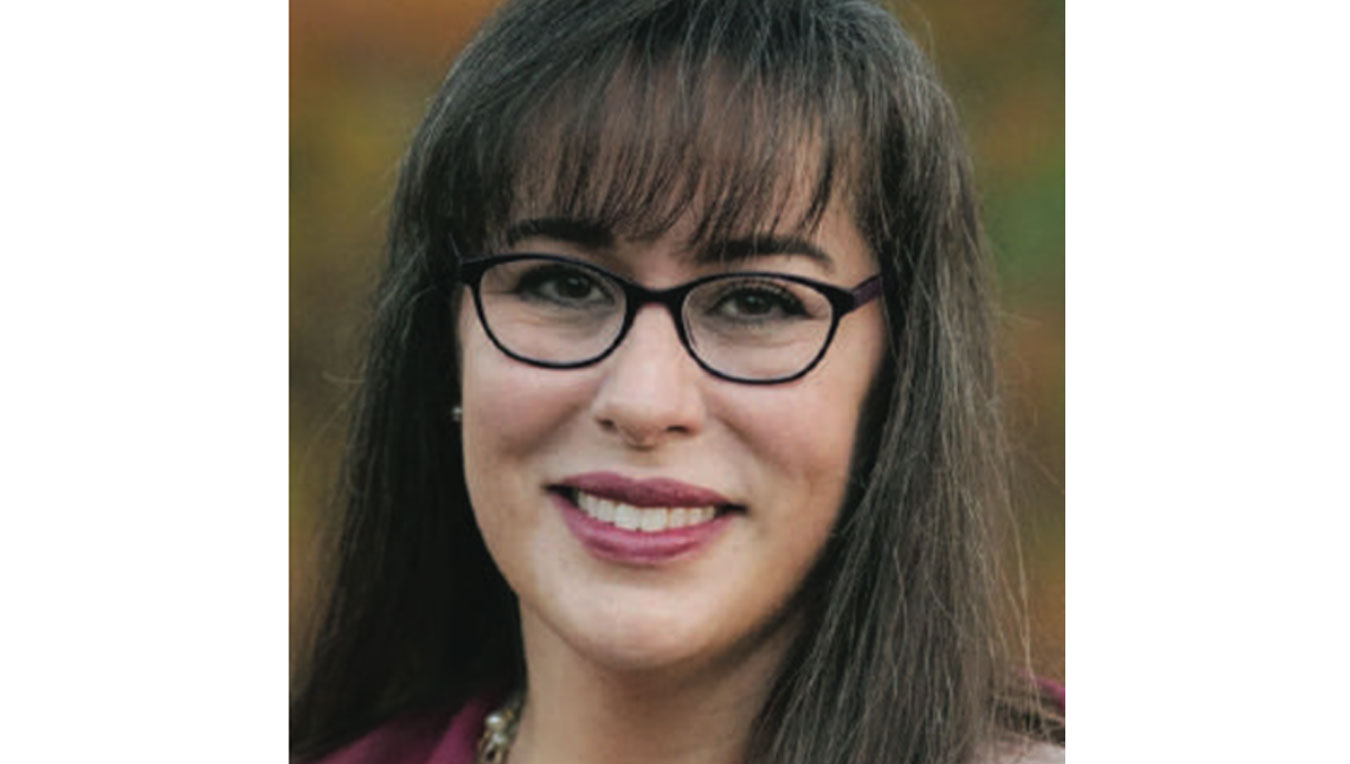
Brooke Harrington, Professor of Sociology at Dartmouth College, New Hampshire, discusses her new book on the money habits of the super-rich
Less fortunate members of society are very heavily surveilled. Governments and aid organisations garner an enormous mass of data on poor people and makes it available for social scientists to examine, but that’s not so for people at the top end of the socio-economic spectrum because, generally, they use their wealth to insulate themselves, not only from government inquiry but from the press, from their neighbours, etc.
There was a popular television show called Upstairs, Downstairs about the lives of the British nobility, seen largely through the eyes of their servants, and since I couldn’t become rich easily (although I did think about submitting a cheeky grant proposal to the National Science Foundation saying, “Send me several hundred thousand dollars so I can swan around at parties and in Monte Carlo, rub elbows with the ultra-rich and study them that way”: I didn’t think I’d have very good luck with that) it occurred to me that if I could become one of the people who managed rich people’s money, I’d be able to see the master behind the scenes, so to speak, and that would be very informative. I found out that you could pay what was then about £50,000, devote two years of your life to intense study, and earn a credential as a wealth manager for the ultra-rich. So that is what I did.
Offshore finance is an international network of financial and legal structures that sells secrecy to rich people. Emphasising the tax-evasion aspect of offshore is misleading because the biggest users of the offshore financial system are from countries that don’t levy any taxes at all, like Saudi Arabia, but what those rich people do need is secrecy, in order to evade other laws they don’t want to obey, like inheritance laws.
People who don’t like to pay their taxes also don’t like to pay back their debts, so offshore also gives them a way to avoid that. It’s a zone of lawlessness for the wealthy, and countries all over the world, particularly countries that used to be British colonies, sometimes try to boost their economies by selling secrecy to rich people. They call it “entering the offshore financial services business”.
You have to be pretty wealthy to afford to use them. At present I believe there’s still only about 3,000 billionaires world-wide but their concentration of wealth is so immense that they’ve scattered their wealth like confetti over many different offshore centres so it becomes difficult for anyone to find.
I went into the research thinking off-shore finance means tax evasion, but it really is much more sinister: the fruit of decades of rich people being able to buy complete legal impunity. It’s almost like a cancer on democracy that is spreading all over the world simultaneously. It’s flaring up with particular viciousness in the United States right now. The ultra-wealthy have come to expect that they should be able to buy their way out of any laws they don’t like, while enjoying the protection of laws that enable them to stay rich, like enforcement of contracts and private property rights.
Perhaps you are the CEO of a multi-national firm or you have a villa in the South of France and maybe a vacation home in Bali as well: the likelihood is that what you need is someone who can coordinate these complex international forms of wealth that you own. Maybe that is tax avoidance—and a typical offshore client is married and has children but also has at least one mistress and maybe a few children born out of wedlock. And then the client wants the wealth manager to help take care of those other women, and perhaps children, so that necessitates forming offshore trusts in different places that the lawfully wedded wife will never know about. That’s a very common scenario.
If you want to avoid taxes, you would use certain structures like, perhaps, you would register your private jet on the Isle of Man—I think the Isle of Man is well known for providing tax relief for that specific kind of asset—but if you want to have a secret trust for a lover that you don’t want your lawfully wedded spouse to know about, then you might go somewhere like the Cook Islands in the South Pacific and have them form an asset-protection trust for you.
Technically when you train to be a wealth manager, you learn about finance and the law, but several wealth managers on different continents told me that their real job is to be social workers for the rich. What you really do when you try to protect and grow a client’s money is you protect the fortune from the people who benefit from it, because oftentimes they have bad habits like, perhaps, they have a drug addiction or they’ve done something that makes them subject to extortion or kidnapping. That is a threat to the fortune.
Or, even more likely, they have feuding family members, each of whom wants a piece of the fortune or perhaps the family business that produces it. Those fights and conflicts are costly and so the real job of the wealth manager is often to show that they can psychologically manage their clients and their clients’ families, so that they don’t destroy themselves financially.
History suggests that it is often a Faustian bargain for countries to become offshore financial centres, especially the smaller post-colonial countries, struggling economically—and their democracies are new. So imagine that you’re the leader of a former Caribbean colony of the British Empire that became in-dependent in the last fifty years. You’re doing OK from tourism and perhaps a fishing industry, but hurricanes whip through your area every so often and wipe out your hotels and tourism.
You need to make money somehow, so somebody comes along, maybe from London or New York, and they say, “We have some wealthy individuals who’d like to place their money in a safe offshore jurisdiction. We understand that you don’t charge much in the way of taxes. Would you consider passing some legislation that would be favourable to the interest of our clients? In return, you will see a big growth in jobs, because we will need to employ people in the wealth-management services industry, and you’ll get all the fees from incorporations and trust registrations and foundation registrations. What do you say?”
Many if not most former colonial states will accept that offer, and for the first couple of years it looks like a win–win, but what begin as little cracks in the system quickly become canyons, because the people who create offshore business in these places expect to be able to have a privileged voice in the law-making process, so that they can come back and say, “My clients have some some new problems they want to solve. Would you consider passing X-Y-Z laws?”
Typically the countries end up saying “Yes” and, more and more, the money from abroad ends up distorting these local democracies. For example, in places like the Bahamas or the Seychelles, you find local people saying, “I no longer have access to the beaches.” Wealthy people from abroad have bought up most of the beachfront property or built they’re hotels on it so it’s no longer accessible to the people who live here.
Local people begin to feel that their representative government no longer represents them but instead reflects the interest of these wealthy people from abroad, and this has happened in countless offshore financial centres. It even has a name: the Finance Curse.
The offshore financial system poses a dire threat to democratic governance— even to capitalism. If you like capitalism you should be worried about offshore finance because plenty of economists have pointed out that when only a very tiny group of people hold most of the capital in the society, eventually there’s very little capital available for entrepreneurs and economies stagnate.
That’s how you get stuck in monopolies where companies that own all the broadband services or all the media services or own all of your water supply— there’s no more competition and it becomes nearly impossible to impose the law on these people. Offshore finance erodes most of the things that we care about in the contemporary world …
This is an edited version of an interview that appeared on Radio 4’s Thinking Allowed on 11 February 2025.
OFFSHORE
STEALTH, WEALTH AND THE NEW COLONIALISM
BROOKE HARRINGTON
WW Norton & Co
Hardback, 25 October 2024
192 pages
L9781324064947