
Catholicism is the largest religious group to be centralised under a single leader. Its 1.4 billion adherents are outnumbered by the world’s 1.9 billion Muslims, but Islam is fragmented — mainly into its Sunni and Shia sects, but also its Ibadi, Sufi and Ahmadiyya movements, and none has any equivalent to the Catholic papacy.
That would seem to make the pope’s powerful position unique: unlike any other religious leader in the world, he has spiritual, symbolic and administrative power over all his adherents and over every branch of the Church that represents them. Seen as the successor of Saint Peter, and the Vicar of Christ on Earth, he defines Church doctrine, appoints top clergy, and approves or rejects the way Catholicism is interpreted by others.
He is also a political leader, head of an independent sovereign state (Vatican City), and thus able to maintain diplomatic relations with the world’s other 190-plus countries and speak out on international issues at the United Nations, where the Holy See has been a Permanent Observer (but not a member) since 1964.
Following his election in 2013, Pope Francis, who died last month, used his authority to soften the tone of Church doctrine. In respect of divorced and remarried Catholics, LGBTQ+ individuals and others on the margins of Church life, he stressed mercy over legalism. He opened up discussion on the role of women in the Church, celibacy (especially in parts of the world where priests were scarce) and blessings for same-sex couples.
For the sake of unity he restricted the celebration of the Latin Mass after having previously authorised its broader use. He spoke out on issues to do with the poor and refugees; populism and extremism; and the arms trade.
In terms of the governance of the Church, he tried to make the Roman Curia (i.e. Catholic bureaucracy) more efficient, transparent and mission-focused, created new oversight bodies to combat Vatican corruption, and appointed cardinals from parts of the world that were previously under-represented in the Church’s global hierarchy.
Much of that, it could be said, was a flirtation with obvious pieties—war is bad; poverty is bad—and with efforts to put right internal issues that should never have become as egregious as they had. But better that than nothing.
At the same time, Francis can be called to account for not doing anything like enough to protect minors (or others) from sexual abuse or to challenge clerical bullying, while also defending, protecting or quietly reassigning clerics accused of such crimes.
Financial mismanagement and internal power struggles—as in the case of Cardinal Becciu: a convicted felon who had to be forced to resign in 2020—persisted under his watch and his efforts at Vatican reform were often bypassed or resisted by entrenched interests.
Confusion and division in the Church were allowed to persist as a result of his favouring of ambiguous language in some teachings, such as whether Communion was permissible for divorced or remarried Catholics, and he deferred “indefinitely” the issue of whether women could serve as deacons, as well as resisting other feminist reforms.
In all, it could be said that polarisation became worse within some quarters of the Church, with papal authority and efforts at structural reform more strongly challenged than ever by conservative bishops and cardinals.
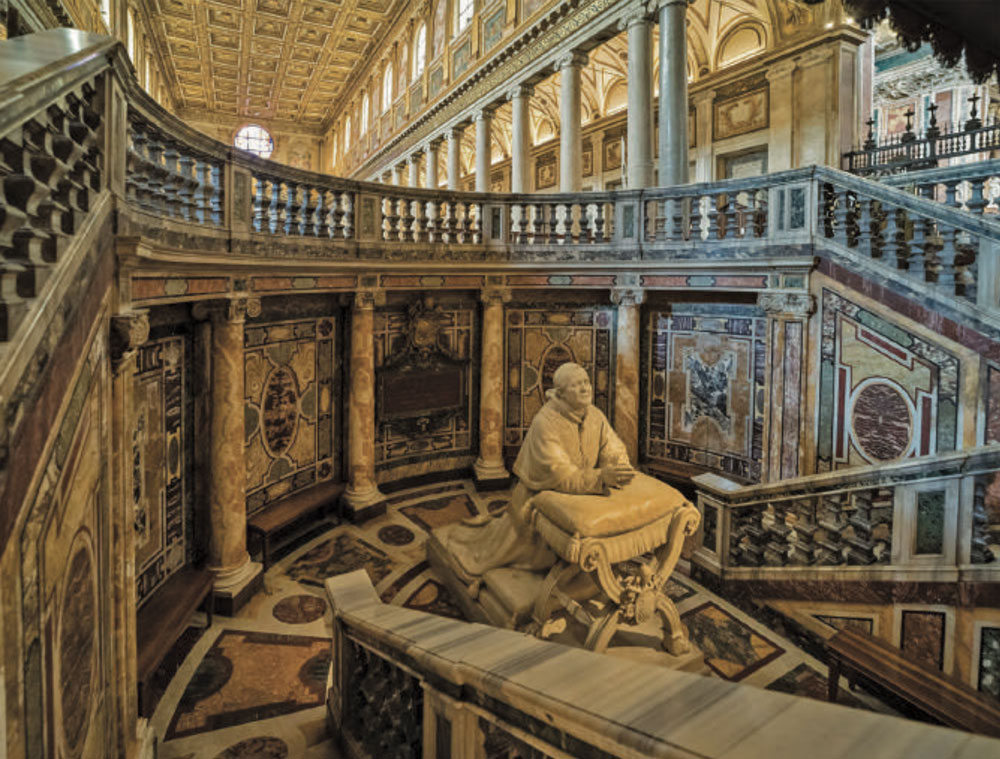
In short, Pope Francis’s time as pope can be seen as strong on some aspects of moral vision but weak on enforcement. Catholics especially in the global South welcomed the way he identified with the poor, living in a “modest” Vatican residence, washing prisoners’ feet and, at the last, being placed in a basic wooden coffin lined with zinc and buried in the Basilica of Santa Maria Maggiore, which he always venerated for its lack of ostentation.
On reforms and doctrinal issues, however, it could be said that he left a trail of ambiguity and inconsistency, unlike John Paul II who asserted far firmer central control but also had the backing of fellow conservatives.
Francis’s death leaves the Catholic Church in a state of profound (though not unprecedented) disunity and one that no sucessor seems likely to bring harmony to, any more than any world leader could, unless some entirely new approach is found for resolving polar differences—or unless the Church’s ailments are subsumed into a global situation that’s even more at odds with itself.
Historically, people with entrenched differences only bury their hatchets when doing so seems to be in their best interests, and that only happens when the alternatives are worse. In other words, only when the world is even more polarised and fragmented and embattled than the Church will warring Catholic clerics be seen—and see themselves—as a symbol of unity, bound more by what they have in common than by what keeps them apart.
That’s a desperate scenario but many would say that that’s the way the world is going. Dona nobis pacem.
by Maggie Bawden