
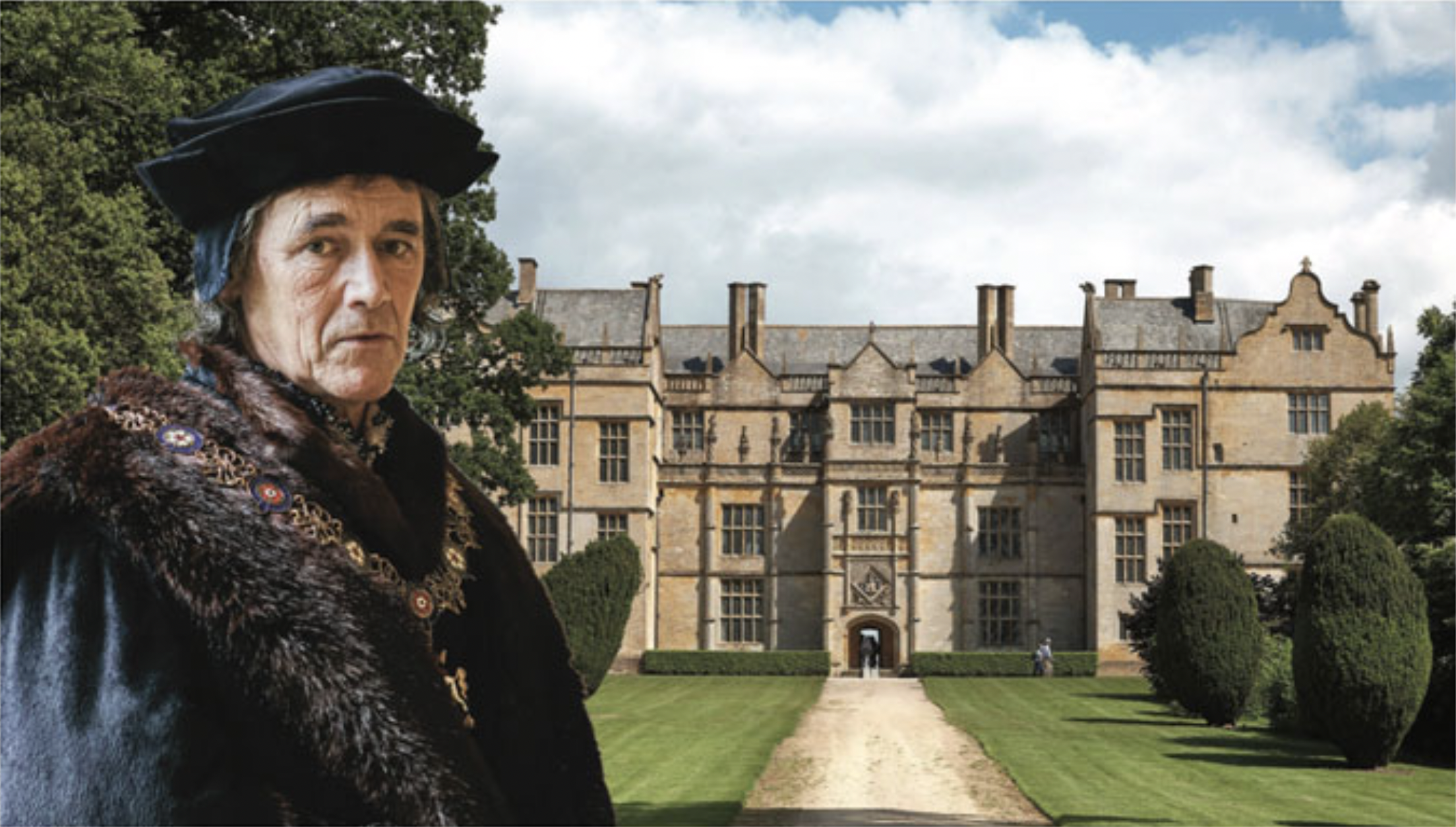
Towards the end of 2024, audiences binge-watched the BBC’s adaptation of Hilary Mantel’s Wolf Hall trilogy, about the rise and fall of Thomas Cromwell between 1500 and 1540. All will have been stunned by its productions values; some may have been surprised by its inconsistencies.
Television is of course all artifice: it entices us into a make-believe world. In watching Wolf Hall we know we’re not seeing scenes from five hundred years ago, that the language is modernised, that the actors have had to rehearse and can’t look at the cameras, that the clothes are implausibly exquisite. There’s no problem with any of that; it goes with the medium.
We don’t even have a problem with the fact that, having locked onto certain faces in the first series, we had to relearn who was who in the second series, presumably because actors who had appeared in 2015 were not available when the second series started filming in November 2023.
Thus Mark Gatiss, playing the snake-like Bishop Gardiner was replaced by the more supercilious Alex Jennings, and the reliable Bernard Hill as Norfolk was replaced by the miscast Timothy Spall. These and other changes were disorientating for the viewer but unsurprising for two series cast nine years apart. Could the producers have done better? Who knows? The third volume of the trilogy, on which the second series was based, wasn’t published until five years after Series One was aired. Them’s the breaks.
The issues of inconsistency that have been worrying us here are different. They have to do with the premium that the production put on authenticity in its mise-en-scène—its costume and set design—and the contrast between this and other elements that operated by the principle that theatrical invention requires the suspension of disbelief.
What we had difficulty with was understanding where the dividing line came between the one and the other.
Wolf Hall was an expensive package, and although the reality of early sixteenth-century England could have been conveyed by building sets that perfectly represented the flavour of the period, it chose instead to film in real locations.
That gave the viewer some truly luscious scenes, with lighting and coloration derived from Vermeer, but these images were doubly untruthful.
Much of the filming—including the Greenwich jousting scene of 1536 in which Henry nearly dies—was carried out at Montacute House in Somerset (above). But Montacute is stone, and was built in the last years of Elizabeth I’s reign, between 1598 and 1601. From the point of view of Cromwell (played by Mark Rylance––also above), that made Montacute a building of the distant future, constructed some sixty years after his death, and in a style that would have made no sense to him.
Even more bafflingly, director Peter Kosminsky showed Montacute as it is today: weather-beaten and covered with half a millennium of lichen. Had Cromwell knocked about in a building that weathered, it would have been built before the Norman Conquest.
The architecture of Henry’s period was Tudor and quite different: brick— and freshly laid brick, not brick eroded and blackened by 500 years of rain and pollution, and then washed and repointed, as we saw in the scenes filmed at Hampton Court. Nor were the barleystick decoration of Cromwell’s chairs and candlesticks real-